Hidden Treasures
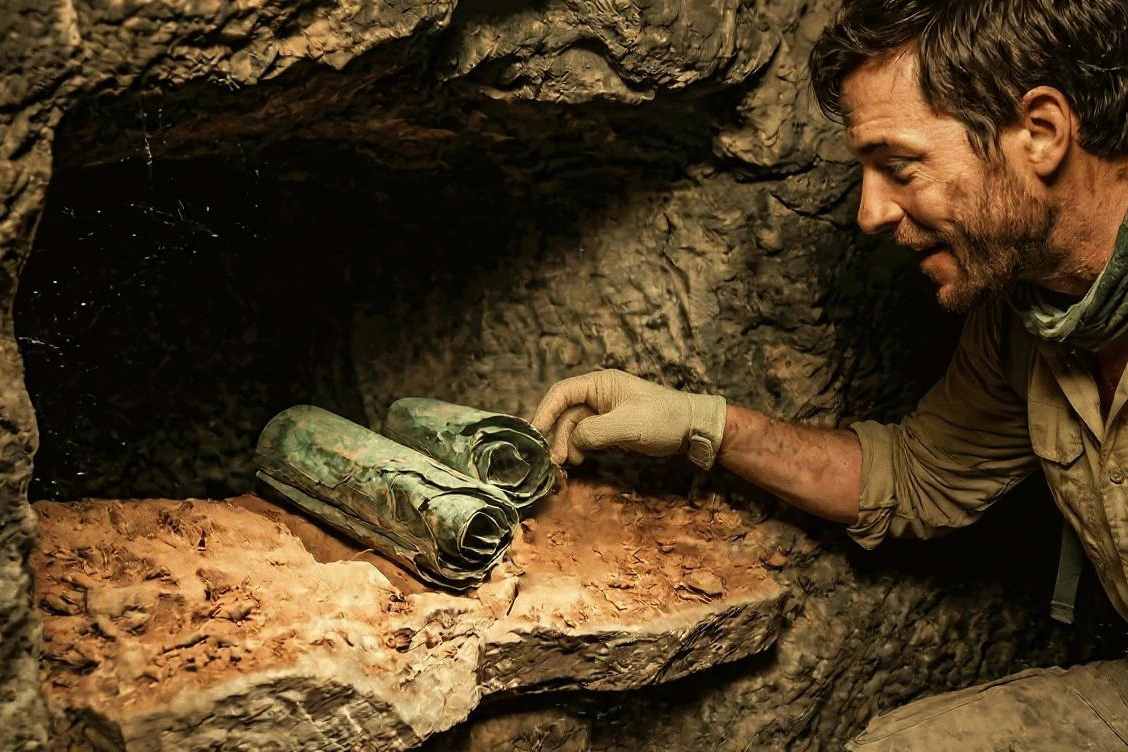
A Secret Cave
After the discovery of the first Dead Sea Scrolls in 1947, archaeologists began searching for more scrolls in caves near the Dead Sea. In 1952, an archaeology team discovered a secret cave that had been walled up in the first century CE. Intrigued by this hidden cave, the archaeologists were not disappointed when, inside the cave, they found a rolled-up scroll made of copper, broken into two pieces.
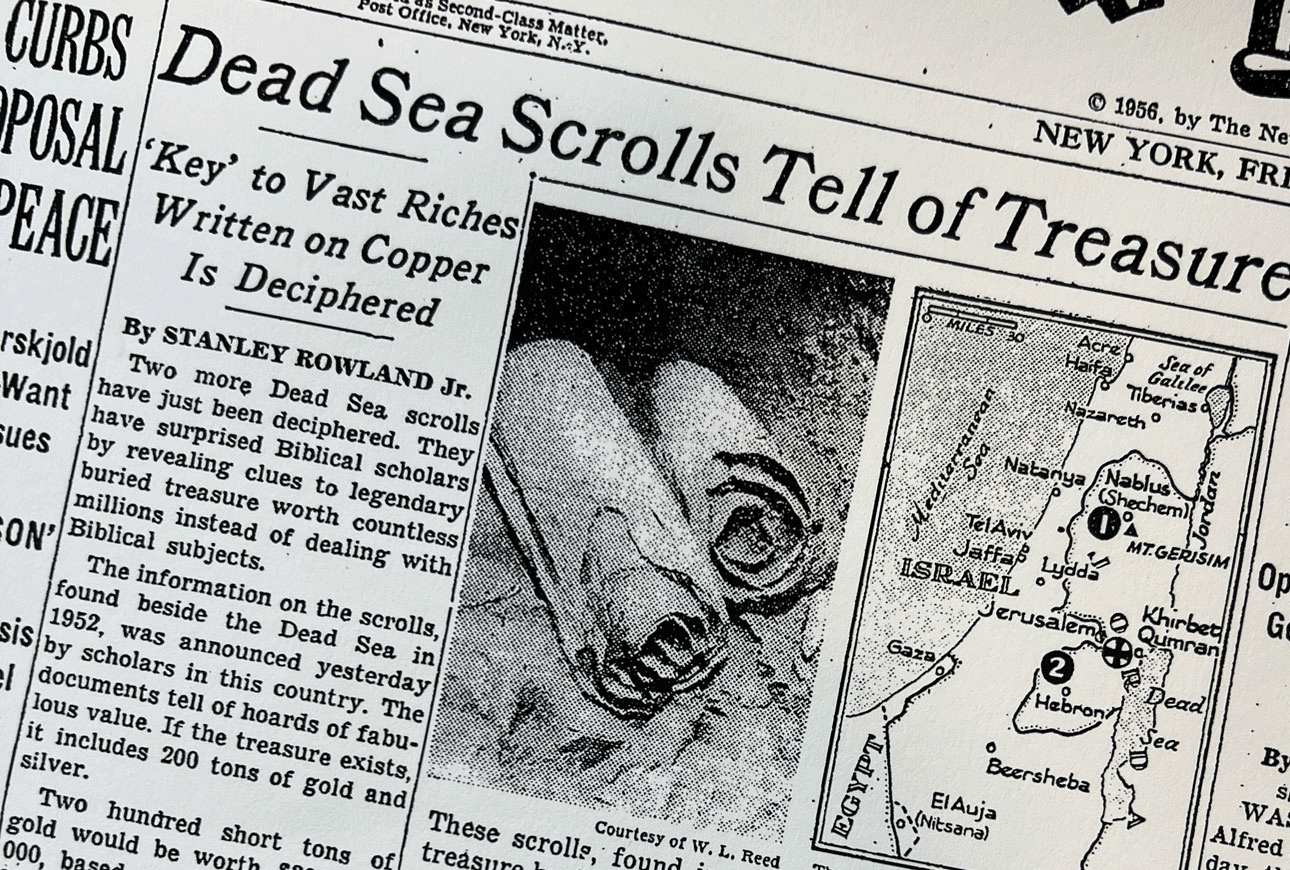
A Timeless Quest
When the so-called Copper Scroll was cut open and translated, scholars were shocked to learn that this artifact was a treasure map. Listing sixty locations of buried treasure at mysterious locations, the Copper Scroll promised vast wealth to the courageous fortune hunter who deciphered its clues.

A Brave Explorer
There was just one problem. Most of the clues made no sense. Was there a secret code that needed to be solved? Were the locations listing impossibly large quantities of gold and silver merely decoys? Was this the same code used in the mysterious Ezekiel Tablets? Joined by a scholar who had studied those tablets, archaeologist John Marco Allegro made progress toward solving the mystery, while publishing the first translation of the Copper Scroll.

Dreaming of Peace
In 1960, Allegro began a search for the Copper Scroll treasures that continues today. Confident that he had deciphered some of the important clues, he began excavating a pair of mysterious tunnels in the Judean Desert. Insisting that the Copper Scroll treasures were the common heritage of the world’s cultures and religions, he asserted that their discovery could serve as a ”bridge to peace” in the troubled Near East.