The Copper Scroll
An Ancient Treasure Map
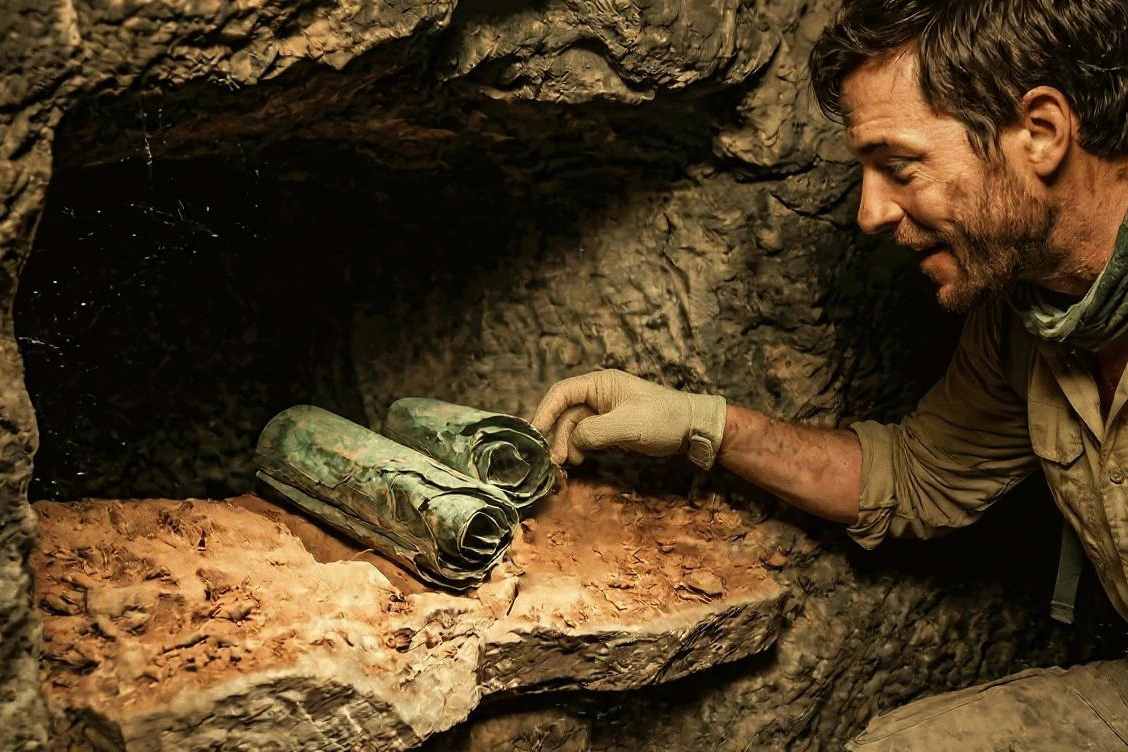
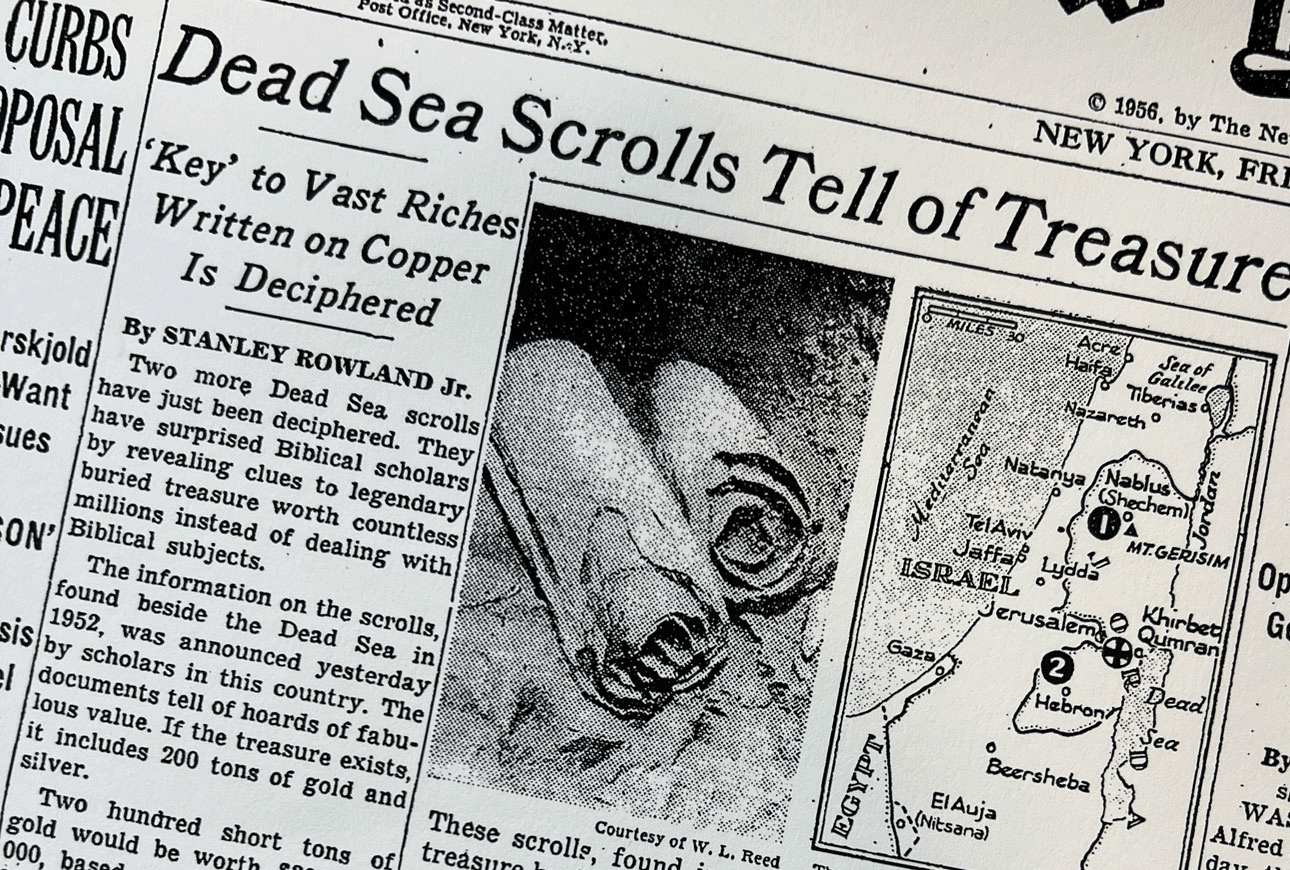
After the discovery of the first Dead Sea Scrolls in 1947, a team of archaeologists from the French School began searching the hundreds of caves near the Dead Sea shore, hoping to find more ancient scrolls. In 1952, the team discovered a mysterious rolled-up scroll made of copper in a remote cave. Known today as the Copper Scroll, this ancient artifact had been rolled up in two pieces and placed in the cave almost 2,000 years ago. As the news of this discovery broke, scholars began arriving to help. But the arrival of Father Starcky with a sheaf of papers about the story of a lost treasure map made of copper hardly attracted attention.
Found in a Dead Sea Cave
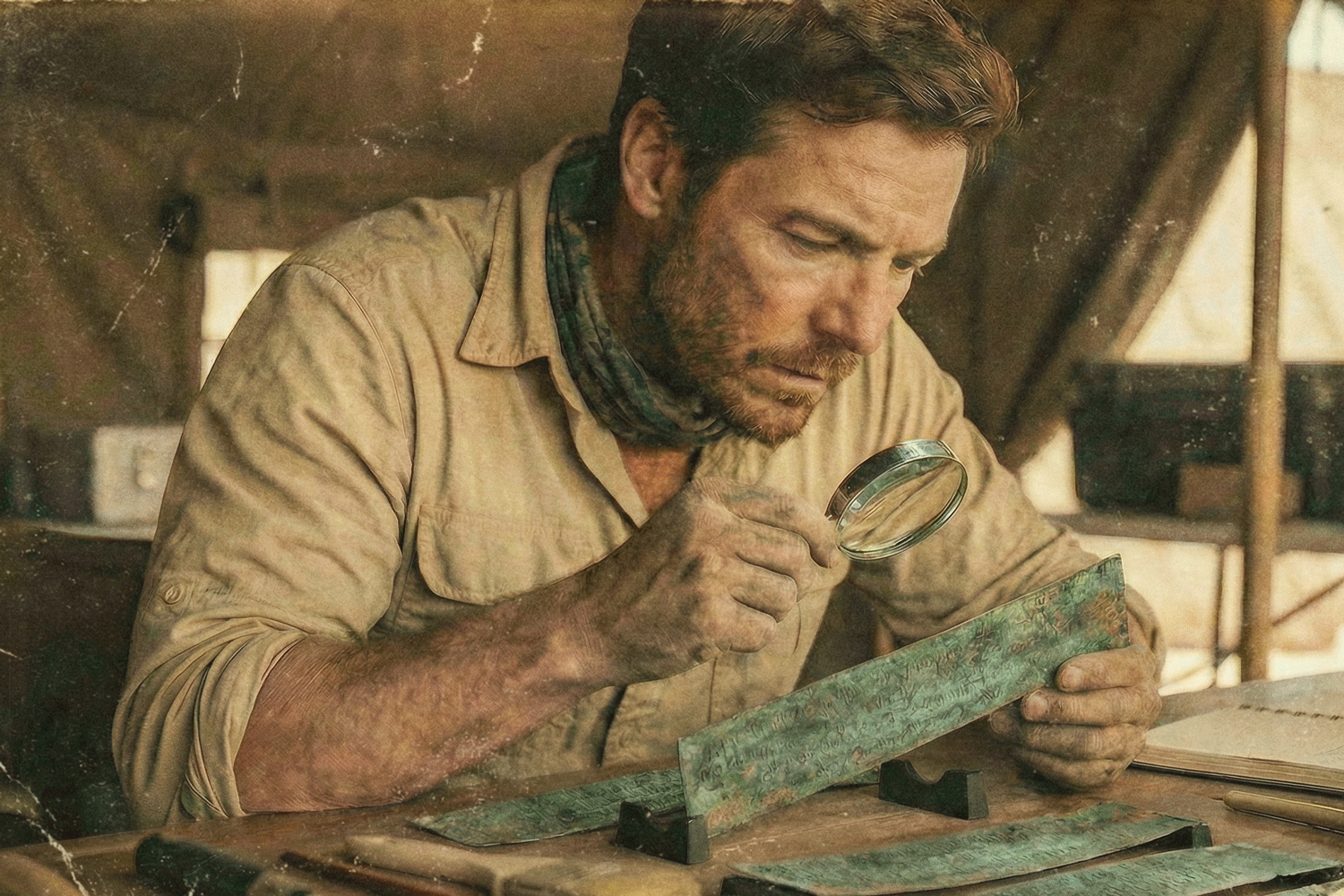
Removed from the cave after almost two millennia, the Copper Scroll was cut into half-pipe sections and translated from its ancient Hebrew script. This process revealed that the Copper Scroll is an ancient treasure map, listing sixty locations of hidden treasure. Notably, the locations listed as holding the largest treasures are described with biblical metaphors whose meaning could only be discerned by those familiar with biblical writings. The leaders of the French School, though, dismissed the Copper Scroll as based on “folklore.” Not even Father Starcky was able to persuade them that the Copper Scroll might lead to real treasure.
Deciphered by a Visionary
Wisely disregarding the decoy locations listed as holding improbably vast quantities of treasure, John Marco Allegro, the archaeologist who published the first translation of the Copper Scroll, began searching for its treasures at sites in the Judean Desert. An expert on ancient Hebrew and biblical literature, Allegro began his search at a complex of ancient stepped tunnels that had been dug hundreds of feet beneath a desert riverbed and allowed to silt up from seasonal flash floods.
With a Dream of Peace
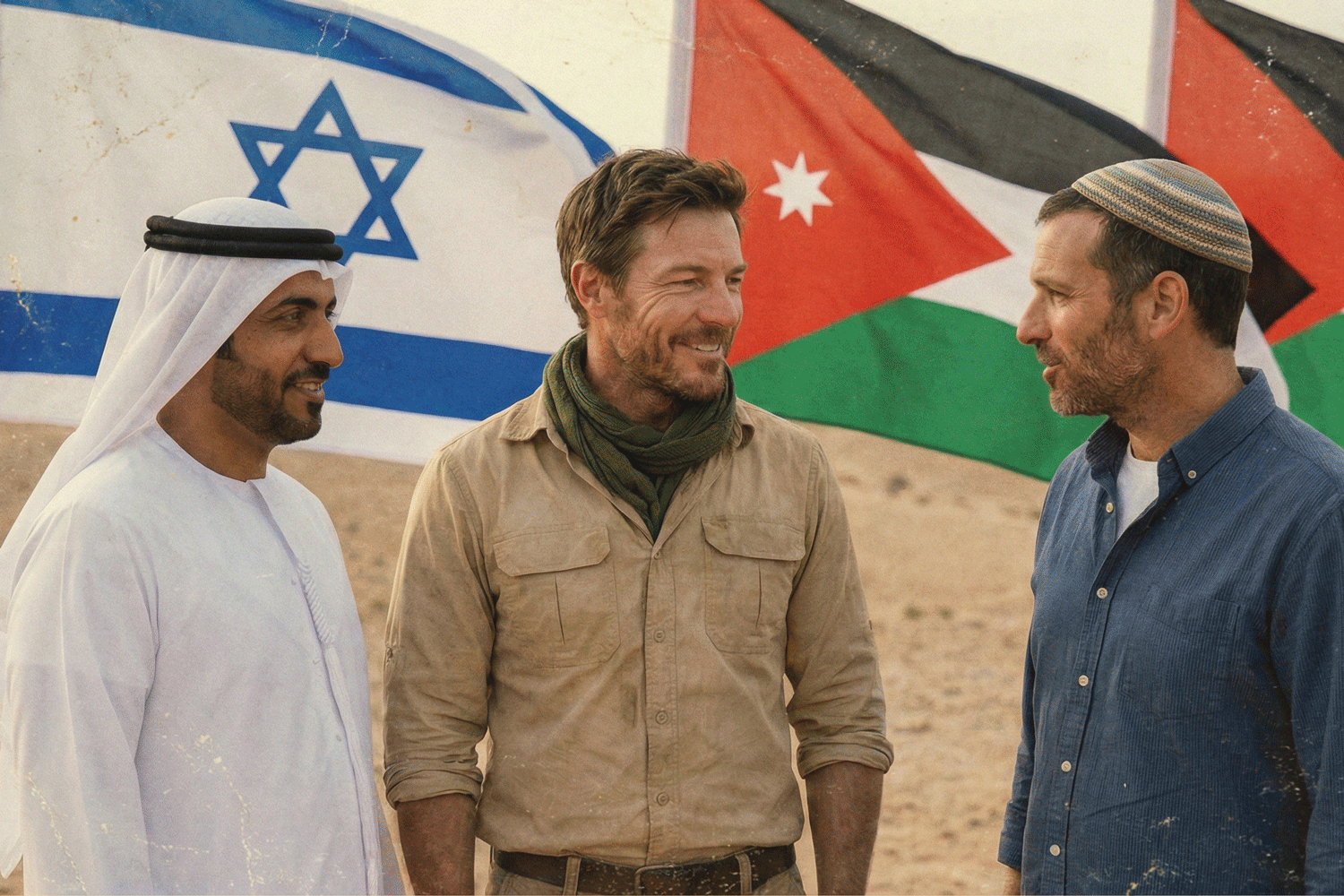
Although his hope of finding the Copper Scroll treasures in the Judean tunnels was ruined by an unusually violent storm, Allegro’s vision of the treasures being used as a “bridge to peace” among the Christians, Jews and Muslims of the Near East never died. In his view, the lost treasures of the Temple in Jerusalem belong to all of humanity and should be shared by all religions and spiritual traditions with roots in the ancient biblical tradition.